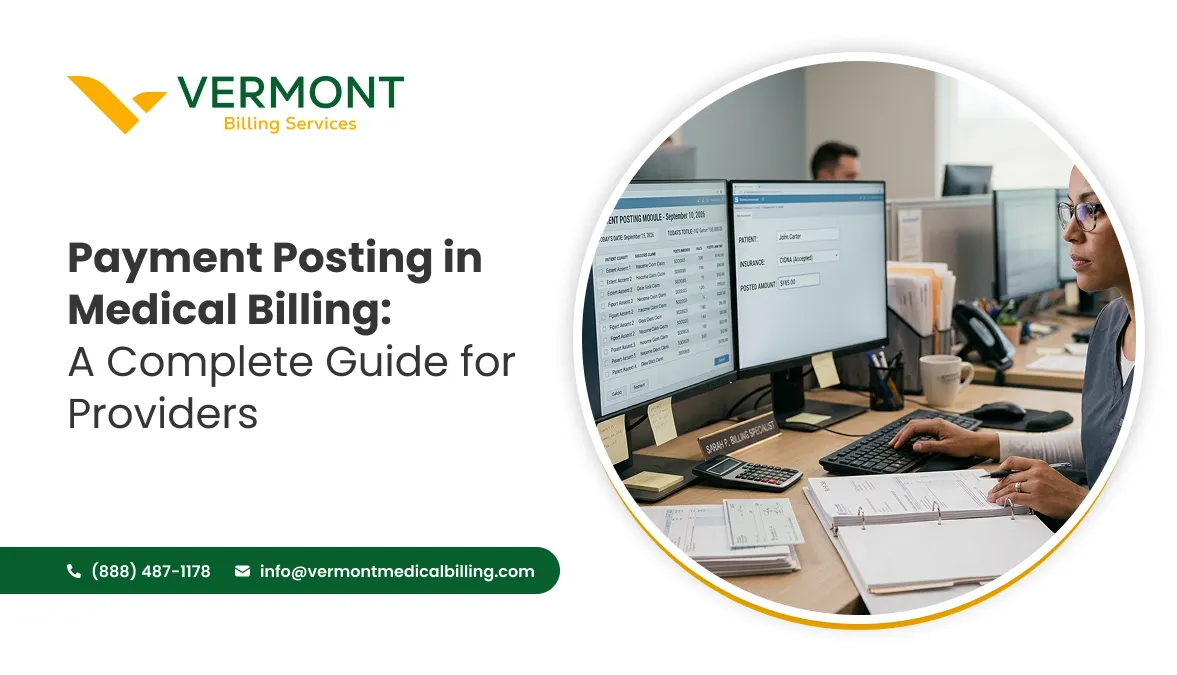
Every healthcare provider depends on accurate payment processing to maintain a healthy revenue cycle. A claim may be submitted correctly, approved by a payer, and processed successfully—but if the payment is not posted accurately, the financial picture of the practice can quickly become unclear.
Payment posting in medical billing is the process of recording payments, adjustments, denials, and patient responsibilities into a healthcare organization’s billing system after claims are processed. It connects insurance reimbursements and patient payments with the services provided, helping providers understand what has been paid, what remains outstanding, and where follow-up action is needed.
For medical practices, payment posting is much more than entering numbers into software. It requires attention to payer rules, claim details, CPT codes, ICD-10-CM diagnosis codes, contractual adjustments, denial reasons, and accurate account reconciliation.
This guide explains the payment posting process in medical billing, common payment types, staff responsibilities, coding considerations, errors to avoid, and best practices that help providers improve their revenue cycle management (RCM).
What Is Payment Posting in Medical Billing?
Payment posting in medical billing is the process of applying received payments and financial adjustments to patient accounts after insurance companies or patients make payments.
A payment poster reviews information from sources such as:
- Explanation of Benefits (EOB) statements
- Electronic Remittance Advice (ERA) files
- Insurance payment checks
- Electronic funds transfers (EFTs)
- Patient payments
The information is then entered into the practice management or billing system so that each claim reflects the correct payment status.
A properly completed payment posting process helps answer important questions:
- Was the claim paid correctly?
- Did the payer apply the contracted rate?
- Is there a remaining patient balance?
- Was the claim denied or partially paid?
- Does the account require follow-up?
Without accurate payment posting, even successful claims can appear unpaid, causing confusion, delayed collections, and inaccurate financial reporting.
Why Payment Posting Matters in Medical Billing
Payment posting plays a critical role in healthcare revenue cycle management because it directly affects financial visibility and claim follow-up.
1. Improves Revenue Tracking
Accurate payment posting allows providers to monitor:
- Insurance reimbursements
- Patient payments
- Outstanding balances
- Underpayments
- Denials
- Contractual adjustments
This information helps billing teams identify revenue problems before they become larger issues.
2. Supports Effective Denial Management
Many denial issues become visible during payment posting. For example, a payment poster may identify:
- Claim denial codes
- Missing information issues
- Medical necessity concerns
- Authorization-related problems
- Incorrect patient responsibility amounts
Early identification allows billing teams to take corrective action.
3. Maintains Accurate Patient Accounts
Incorrect posting can result in:
- Incorrect patient statements
- Duplicate balances
- Incorrect collections activity
- Poor patient experience
Accurate payment application ensures patients are billed only for appropriate amounts.
Even though the steps may vary from one company to another the main aim stays the same—make sure every payment and every adjustment shows up correctly in the billing system.
What Is the Payment Posting Process in Medical Billing?
The payment posting process in medical billing typically involves several important steps.
Step 1: Receive Payment Information
Payments may arrive through:
- Electronic Remittance Advice (ERA)
- Explanation of Benefits (EOB)
- Insurance checks
- EFT deposits
- Patient payments
The billing team reviews the payment documentation before entering information into the system.
Step 2: Verify Claim Information
The payment poster compares payment details with the original claim, including:
- Patient information
- Date of service
- Provider information
- CPT procedure codes
- Diagnosis codes
- Modifier usage when applicable
- Allowed amounts
- Paid amounts
This step helps identify discrepancies.
Step 3: Apply Insurance Payments
Insurance payments are posted according to payer information.
The poster records:
- Amount paid by insurance
- Allowed amount
- Contractual adjustment
- Deductible amount
- Copayment
- Coinsurance
- Non-covered amounts
Step 4: Record Adjustments
Adjustments explain differences between billed charges and paid amounts.
Examples include:
- Contractual adjustments
- Write-offs based on payer agreements
- Non-covered service adjustments
Adjustments should only be applied according to appropriate payer rules and organizational policies.
Step 5: Identify Denials and Exceptions
If a claim is denied or underpaid, the payment poster should identify the reason.
Common denial-related issues include:
- Missing documentation
- Incorrect coding
- Eligibility problems
- Authorization requirements
- Medical necessity concerns
The account can then move into denial management workflows.
Step 6: Reconcile Payments
The final step is reconciliation. Posted payments are compared with deposit records and payer documentation to ensure that all transactions have been recorded accurately.
Types of Payment Posting in Medical Billing
There are several types of payment posting depending on the source of payment.
| Payment Type | Description |
|---|---|
| Insurance Payment Posting | Recording payments received from insurance companies after claim processing |
| Patient Payment Posting | Applying payments made directly by patients |
| ERA Payment Posting | Posting electronic remittance information automatically or manually |
| Manual Payment Posting | Entering payment information from paper documents such as checks or EOBs |
| Adjustment Posting | Recording reductions, write-offs, and other account changes |
Each type requires careful review to avoid incorrect account balances.
Posting Medical Insurance Payments
Posting medical insurance payments requires attention because medical insurance payments depend on many factors including payer contracts claim details and documentation.
A payment poster typically reviews:
CPT Codes
CPT codes describe medical procedures and services provided to patients. Payment amounts are often linked to the services reported on the claim.
However, correct CPT code selection depends on documentation, clinical circumstances, coding guidelines, and payer requirements.
ICD-10-CM Diagnosis Codes
ICD-10-CM codes communicate the patient’s diagnosis or condition supporting the medical service.
Diagnosis coding helps establish medical necessity but does not determine payment alone.
Claim Adjustments
Insurance companies may apply adjustments based on:
- Contract agreements
- Coverage limitations
- Patient benefits
- Non-covered services
Denial Information
Denial codes and payer messages provide important information about why payment was reduced or rejected.
Payment posting teams should capture denial information accurately so that denial management teams can investigate.
Payment Posting Roles and Responsibilities
Payment posting requires coordination between several healthcare revenue cycle professionals.
Payment Poster Responsibilities
A payment poster commonly handles:
- Reviewing EOBs and ERAs
- Applying insurance payments
- Posting patient payments
- Recording adjustments
- Identifying discrepancies
- Updating account balances
- Maintaining payment accuracy
Medical Billers
Medical billers often use posted payment information to:
- Follow up on unpaid claims
- Manage outstanding balances
- Submit corrected claims
- Handle payer communication
Medical Coders
Coders support accurate reimbursement by ensuring:
- Procedures are coded correctly
- Diagnosis codes support medical necessity
- Documentation supports reported services
Billing Managers and RCM Leaders
Managers monitor:
- Payment accuracy
- Accounts receivable performance
- Denial trends
- Posting productivity
- Revenue cycle issues
Common Payment Posting Errors and Their Impact
Even small posting mistakes can affect revenue cycle performance.
Incorrect Payment Application
Applying a payment to the wrong patient account or claim can create inaccurate balances.
Solution: Verify patient identifiers, dates of service, and claim information before posting.
Missing Adjustments
Failing to record adjustments can make accounts appear incorrectly unpaid.
Solution: Review payer remittance details carefully.
Ignoring Denial Information
A denial is not just a payment issue—it provides information about claim problems.
Solution: Capture denial reasons and route accounts for follow-up.
Duplicate Posting
Posting the same payment more than once can create false account credits.
Solution: Use reconciliation processes and payment verification checks.
How Payment Posting Affects Denials and Revenue Cycle Management
Payment posting is closely connected with denial management and overall RCM performance.
Accurate posting helps organizations:
- Identify payer trends
- Monitor reimbursement patterns
- Track denial reasons
- Improve claim accuracy
- Reduce accounts receivable delays
For example if a practice notices repeated underpayments from a payer for services the billing team can investigate whether the problem is due, to contract terms, coding, documentation or claim submission errors.
Best Practices for Accurate Payment Posting
Healthcare organizations can improve payment posting accuracy by following these practices:
Train Staff Regularly
Payment posters should understand:
- Billing workflows
- Payer requirements
- Coding terminology
- Adjustment handling
- Denial processes
Use Electronic Remittance Tools
ERA-based workflows can reduce manual entry errors and improve efficiency.
Perform Regular Audits
Routine reviews help identify:
- Incorrect postings
- Missing adjustments
- Reconciliation issues
Maintain Clear Workflows
Standard operating procedures should define:
- Who reviews payments
- How exceptions are handled
- When accounts require escalation
Monitor Key Performance Indicators
Useful metrics include:
- Payment posting accuracy
- Posting turnaround time
- Denial rates
- Accounts receivable trends
Frequently Asked Questions (FAQs)
What is payment posting in medical billing?
Payment posting in billing is the process of recording insurance payments, patient payments, adjustments and denial information into a billing system after claims are processed.
Why is payment posting important in Medical billing?
Payment posting helps providers maintain patient accounts, track reimbursement identify denials and manage the overall revenue cycle.
What are the main types of payment posting in billing?
The main types include insurance payment posting, patient payment posting, ERA posting, manual posting and adjustment posting.
How does payment posting help reduce claim denials?
Accurate payment posting helps identify reasons and reimbursement problems allowing billing teams to correct issues and improve future claims.
Are CPT codes and ICD-10 codes involved in payment posting?
Yes. Payment posters review claim details that include CPT procedure codes and ICD-10-CM diagnosis codes to verify payment accuracy. Code selection and reimbursement depend on documentation, payer requirements and applicable coding guidelines.
What is the difference between payment posting and billing?
Billing focuses on creating and submitting claims, for healthcare services while payment posting focuses on recording payments and adjustments after claims are processed.